
Build skills for your first shift.
Bartending Classes on Long Island & Online
Start with the skills a new bartender can practice: accurate pours, dependable recipes and a calm approach to serving a round. Try our free challenge, explore beginner training or plan a private class for your group.
Beginners welcome. Course development is underway. An inquiry is not enrollment; dates, format, price and access will be confirmed before registration opens.

Free mini lesson · About 2 minutes
Can you think like a bartender?
Three small decisions. Helpful tips after every choice. Finish with a practical beginner bartender field guide you can keep.
0 of 3 decisions explored
Your first round
A good drink starts with a good decision.
No ingredients, equipment or account needed. Choose how you would mix, balance and finish a drink. There is no timer, and you can play again.
01 · Choose your method
See the answer
Shake with ice. Many citrus-and-syrup drinks benefit from a shake to combine, chill and aerate them. Follow the recipe, and keep sparkling ingredients out of the shaker.
02 · Find the balance
See the answer
Try a small, measured amount of syrup, then taste again. Sweetness can soften the impression of acidity. One change at a time helps you understand the result; more syrup is not the answer to every unbalanced drink.
03 · Keep the sparkle
See the answer
Add chilled sparkling ingredients just before serving and combine gently. You can prepare the recipe’s still ingredients ahead when suitable, then add the bubbles at the finish. Never shake a carbonated drink in a sealed shaker.
First round complete
Your field guide is ready.
. You have explored mixing, balance and finishing. Now put those decisions to work.
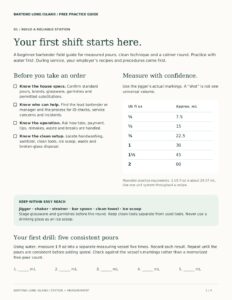
Your practical next step
Your First Shift: Beginner Bartender Field Guide
Keep a useful reference beside your practice station. Go beyond the quiz with measured recipes, service habits and a simple way to check your progress.
- Jigger measurements and practice drink specifications.
- A small-round workflow, from reading the order to resetting.
- Common mistakes, practical fixes and a practice checklist.
Free learning resource. No experience or paid enrollment needed.
Get the four-page printable PDF
Enter your email to open the guide immediately. Course updates are optional and need a separate opt-in. You can also read the guide below without submitting a form.
Your request and any optional course-update consent are saved securely so we can manage this resource and follow your preferences. Privacy policy.
Read the practical guide on this page
Bartend Long Island · Free practice guide
Your First Shift: Beginner Bartender Field Guide
A practical reference for measured pours, clean technique and a calmer round. Practice with water first. During service, your employer’s recipes and procedures come first.
1. Build a reliable station
Before you take an order
- Know the house specs. Confirm standard pours, brands, glassware, garnishes and permitted substitutions.
- Know who can help. Find the lead bartender or manager and the process for ID checks, service concerns and incidents.
- Know the operation. Ask how tabs, payment, tips, remakes, waste and breaks are handled.
- Know the clean setup. Locate handwashing, sanitizer, clean tools, ice scoop, waste and broken-glass disposal.
Measure with confidence
Use the jigger’s actual markings. A “shot” is not one universal volume.
| US fl oz | Approximate mL |
|---|---|
| ¼ | 7.5 |
| ½ | 15 |
| ¾ | 22.5 |
| 1 | 30 |
| 1½ | 45 |
| 2 | 60 |
1 US fl oz is about 29.57 mL. Use one unit system throughout a recipe.
Your first drill: five consistent pours
Using water, measure 1 fl oz into a separate measuring vessel five times. Record each result. Repeat until the pours are consistent before adding speed. Check against the vessel’s markings rather than a memorized free-pour count.
Pour 1: ____ mL · Pour 2: ____ mL · Pour 3: ____ mL · Pour 4: ____ mL · Pour 5: ____ mL
2. Four specs. Three methods.
These are training versions, not universal house standards. Each makes one cocktail. Use a measured pour and the specified products. Never shake carbonated ingredients in a sealed shaker.
Shake · Sour family
Daiquiri
- 2 fl oz white rum
- ¾ fl oz fresh lime juice
- ¾ fl oz 1:1 simple syrup
Shake with ice and strain into a chilled coupe.
Watch for: 1:1 syrup means equal weights of sugar and water. Rich syrup is not a one-for-one swap.
Stir · Spirit-forward
Negroni
- 1 fl oz gin
- 1 fl oz Campari
- 1 fl oz sweet red vermouth
Stir with ice, strain over fresh ice in a rocks glass; finish with orange.
Watch for: Keep the equal-parts reference in mind. Another aperitif can change the balance.
Build · Highball
Gin & tonic
- 1½ fl oz gin
- 4 fl oz chilled tonic water
- Lime garnish
Build over ice in a highball and combine gently.
Watch for: Use the venue’s glass and mixer amount. A taller glass does not automatically mean more gin.
Build · Sparkling
Aperol spritz
- 3 fl oz chilled Prosecco
- 2 fl oz Aperol
- 1 fl oz chilled soda water
Build over ice in a wine glass, combine gently; finish with orange.
Watch for: Open and add sparkling ingredients near service. Do not prepare the finished bubbly drink hours ahead.
Choose the method: Shake many citrus-and-syrup drinks; stir spirit-forward recipes when directed; build simple highballs in the serving glass. Recipe-specific instructions take priority.
Negroni and spritz proportions draw on common classic structures. The Daiquiri uses a syrup-based practice variation.
3. Organize before you rush
Practice ticket: one Daiquiri, one Negroni and one gin & tonic. Use water substitutes while rehearsing. This is one possible sequence; your venue’s equipment and service standards determine the final workflow.
- Read back the order. Confirm the drink, requested brand and changes. Ask about unclear requests before pouring. Address any allergy or service concern through the venue’s procedure.
- Stage the complete round. Set out the coupe, rocks glass and highball. Prepare garnishes and chilled tonic. Have clean tools ready. Use a clean tasting method approved by your venue.
- Measure the still ingredients. Measure the Negroni into a mixing glass and the Daiquiri into a shaker, without ice yet. This separates recipe assembly from dilution. Do not leave finished drinks waiting while searching for ingredients.
- Chill, finish, then add bubbles. Add ice and stir the Negroni. Shake and strain the Daiquiri near the end of the round. Strain the Negroni over fresh ice. Build the gin & tonic last so it keeps its fizz.
- Check, hand off and reset. Match each drink to the ticket, add the correct garnish and identify each drink at handoff. Clear used tools and spills, restock low items and return the station to its ready position.
Translate the guest’s language
- Neat
- No ice or added mixer.
- Up
- Chilled, then strained into a glass without ice.
- On the rocks
- Served over ice.
- Tall
- Clarify the glass and mixer amount; keep the agreed spirit pour.
- Call brand
- A guest names a specific spirit brand.
- 86
- An item is unavailable. Confirm the alternative before making it.
4. Notice. Correct. Practice again.
Accuracy, service judgment and a clean station matter more than rushing. Use this page with a lead bartender or instructor. It is a practice record, not a qualification or permission to serve alcohol.
Fix the cause, not just the taste
- Too sharp
- Check the recipe, citrus and syrup strength first. During practice, try one small measured syrup adjustment and taste again.
- Too sweet
- Check the citrus and liqueur amounts. During practice, test a small measured citrus adjustment instead of changing everything.
- Watery or warm
- Review ice quality, chilling time and how long the drink waited. Follow the house remake process rather than adding extra spirit.
- Wrong ingredient or allergy concern
- Stop. Tell the lead, use the venue’s remake and cleaning procedure, and do not promise that removing a garnish makes it safe.
- Broken glass near ice
- Stop using the affected area and tell the lead. Follow the venue’s disposal, ice replacement and cleaning procedure. Never pick fragments out and continue.
Your supervised practice scorecard
- I can identify the correct jigger markings and repeat five measured pours.
- I can make the four practice drinks from a written spec without guessing.
- I can read back and organize the three-drink round, then reset the station.
- I know whom to ask about IDs, service concerns, allergies and remakes.
Date: ____________ · Reviewed with: _____________________________
One thing to improve next: ______________________________________
More practice: bartendlongisland.com/bartending-classes/
Choose your path
Beginner training or a private group class?
Beginner training · In development
Bartending Foundations
Build a practical foundation for bar and event work, including people exploring bartending for additional income. Learn to measure accurately, follow a house recipe, organize a round and communicate clearly with guests and your team.
- 1. Set up & measureWork from a clean station and pour consistently.
- 2. Balance & mixUnderstand ingredients and choose the right method.
- 3. Learn drink familiesRead specs and practice a useful recipe set.
- 4. Handle a roundSequence tickets and communicate with guests.
- 5. Prepare for servicePrep, reset and follow responsible-service procedures.
- 6. Show your skillsComplete measured drills and a practical assessment.
Paid enrollment is not open. Tell us if you prefer in-person learning on Long Island, online or either. We will confirm the available format, dates, price and access before registration opens.
Private groups · Long Island
A hands-on mixology class for your group
Picture your friends at the bar, trying a technique together and comparing what they made. A private class makes the drinks part of the activity, whether you are celebrating a birthday, planning a bachelorette or getting your team together.
- Start with your group. Tell us your date, location and approximate group size.
- Choose the direction. Discuss cocktail preferences, beginner-friendly techniques and alcohol-free options.
- Know the plan. Your proposal confirms the format, ingredients, equipment and responsibilities.
An inquiry starts a conversation. We will confirm availability and recommend a suitable format.
Ask a question. Choose your direction.
What would you like to learn?
Tell us your goal and whether you prefer in-person or online learning. For a private group, include your date, location and approximate group size in your message.
This starts a conversation. It does not enroll you, charge you or create a course account. We will reply with the next step.
You can choose course updates separately. How we use your information.
Your class inquiry is in.
Experience behind the lesson
A team that works real events
Sean and the Bartend Long Island team provide bartending for private parties, weddings and corporate events across Long Island and NYC. Our lessons draw on the decisions that matter during service: consistent measurements, clear preparation and a menu the team can execute.
Meet Bartend Long Island or explore our cocktail recipes.
“My engagement party was a complete success thanks to the excellent service. Professional, friendly, and made sure every guest was taken care of.”
“Amazing experience. Great drinks, great energy, and incredibly accommodating. Highly recommend for any event.”
These reviews describe our event bartending service, not student results.
Bartending class questions
Do I need experience or equipment for the free challenge?
No. The challenge is a short interactive introduction you can complete on your phone or computer. It uses three practical decisions, explains every answer and offers a useful beginner bartender field guide. No alcohol, equipment, payment or account is needed.
Can I enroll in the online course now?
Paid enrollment is not open yet. Try the free challenge or use the inquiry form above. We will publish the available format, schedule, price, access and completion requirements before registration opens.
How is a private class different from event bartending?
A private class is a guided learning activity for your group. Event bartending focuses on serving your guests. Tell us which experience you want so we can recommend the right format.
What does a private class cost?
We provide a tailored quote after discussing your group, location, format, ingredients and equipment. Your proposal will show the agreed details and responsibilities.
Is this useful if I want to work as a bartender?
The planned beginner course focuses on measured pours, reading recipes, service flow, guest communication and practice under observation. It is intended to build useful foundations for bar and event work. Completing a course does not guarantee employment, earnings or a place on our team.
What certificate will the course offer?
We are developing a Bartend Long Island Certificate of Completion, tied to completing the lessons, knowledge checks and a practical assessment. This is our own course award, not independent accreditation or a government-issued bartending license. Final assessment and completion requirements will be published before enrollment opens.
Can I also get TIPS certified?
TIPS is separate alcohol-server training with its own course and exam. You can review the official New York TIPS options. We are exploring how to connect this with our course; a TIPS course fee or certification is not currently included in BLI enrollment. Confirm the appropriate course with the provider and your employer.