
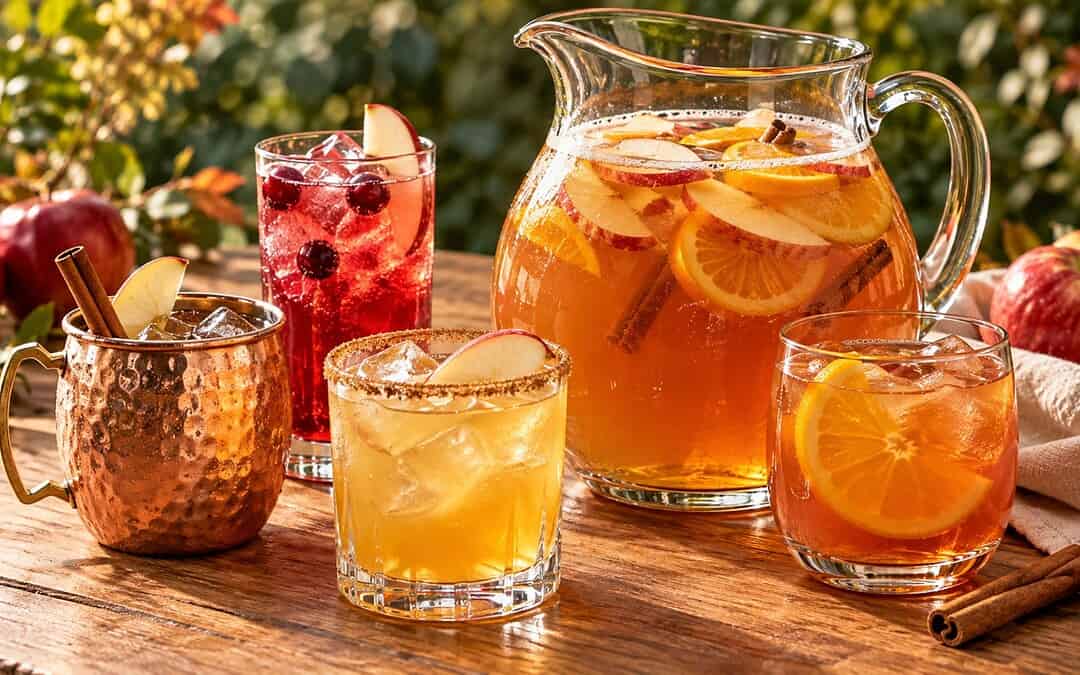
Fall entertaining · A bartender’s prep guide
Make fall batch cocktails for 8, 20 or 50 servings. Start with an apple cider mule, rum punch, cider margarita or alcohol-free cranberry fizz, then follow the prep and pouring notes below.
Our rule at Bartend Long Island: plan the last step before you mix the first jug. Punch can be a fast pour. Mules need fresh bubbles. Margaritas still benefit from a shake. Choose the finish that fits your party.
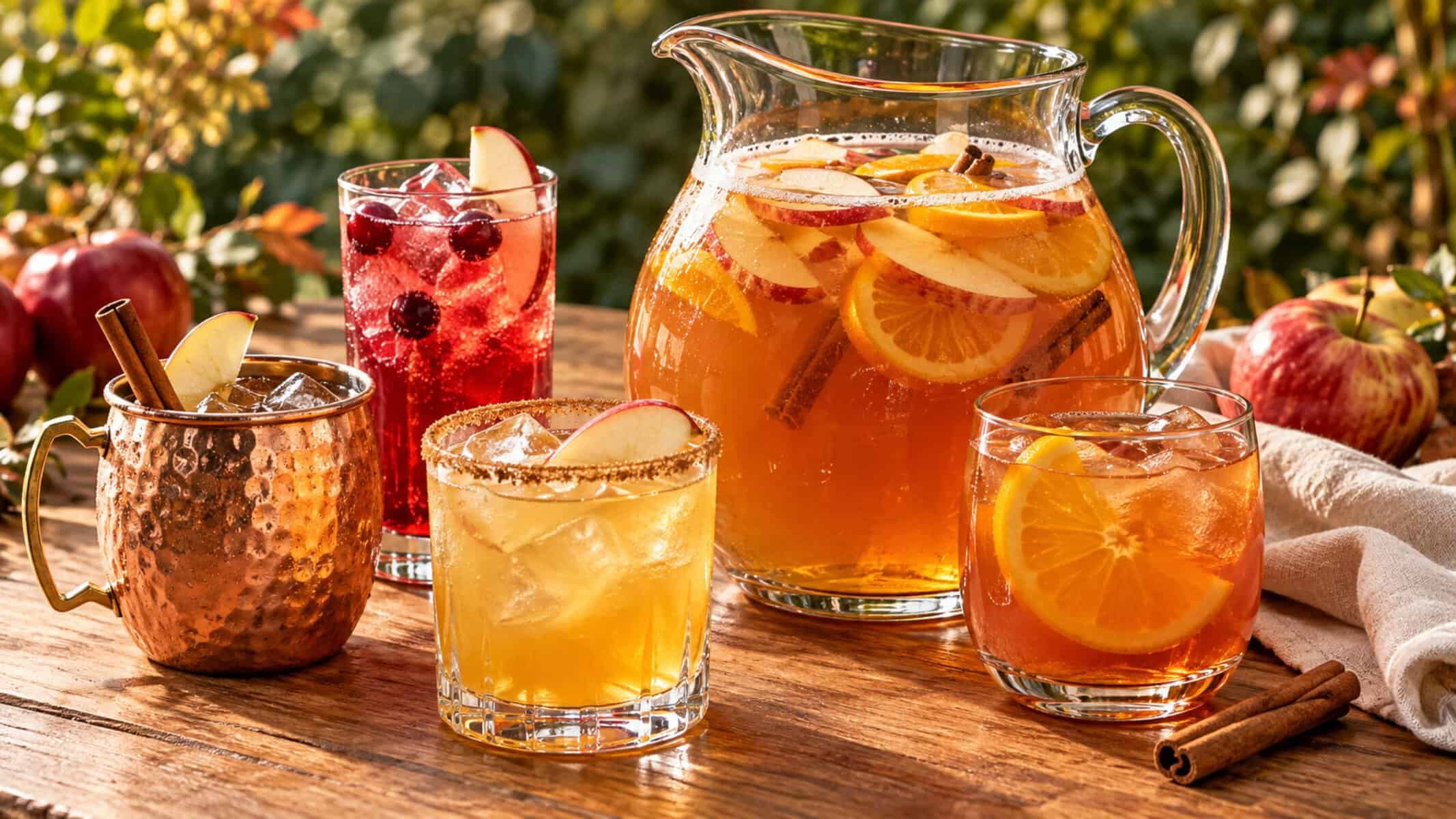
Four recipes for 8, 20 or 50 servings
These tables scale our published drink formulas. Choose the quantity for the number of pours you want, not the number of guests. Measurements are US fluid ounces, with cup equivalents for the eight-serving batches. Ice and garnishes are separate. Keep sparkling mixers out of the stored base, and taste one finished drink with your actual ingredients before scaling.
Kitchen conversions: 1 cup = 8 fl oz · 1 quart = 32 fl oz · 1 gallon = 128 fl oz. A 750 mL bottle holds about 25.4 fl oz.
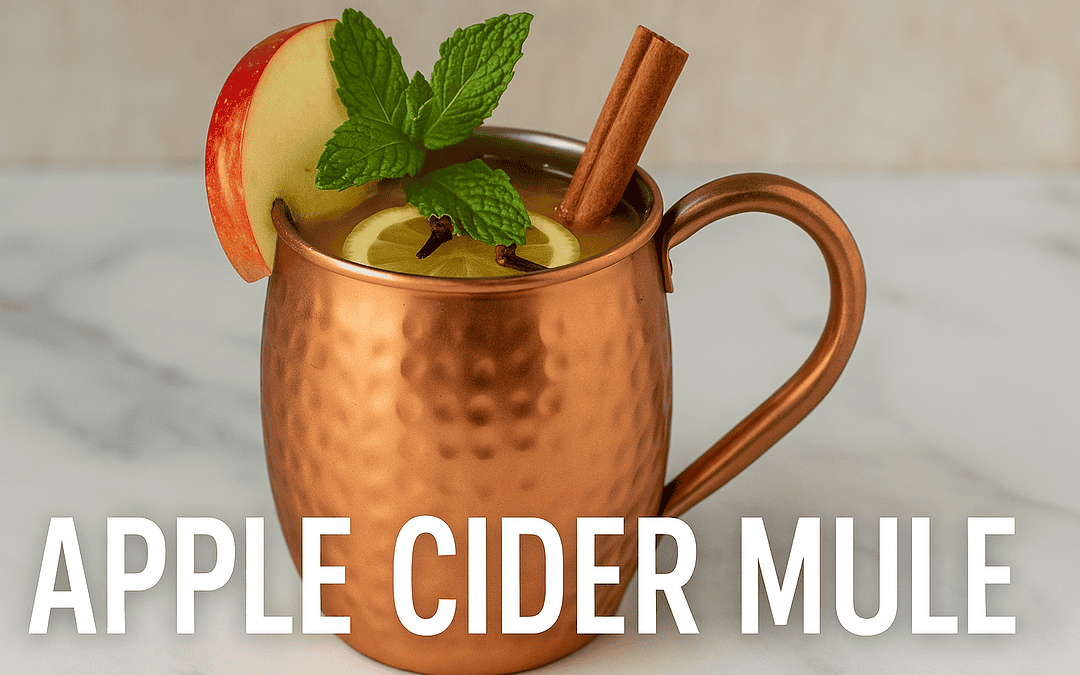
1. Apple Cider Mule
A bright fall pitcher cocktail with cider, lime and ginger beer. Prep the still base in advance, then open the ginger beer as you serve.
| Ingredient | 8 servings | 20 servings | 50 servings |
|---|---|---|---|
| Vodka | 16 fl oz2 cups | 40 fl oz | 100 fl oz |
| Apple cider | 16 fl oz2 cups | 40 fl oz | 100 fl oz |
| Fresh lime juice | 4 fl oz½ cup | 10 fl oz | 25 fl oz |
| Chilled base total | 36 fl oz4½ cups | 90 fl oz | 225 fl oz |
| Ginger beerAdd to glasses | 28 fl oz3½ cups | 70 fl oz | 175 fl oz |
- Mix and chill the base Combine the vodka, cider and lime in a sealed container. Refrigerate until thoroughly cold.
- Pour and add ginger beer Fill a mug or tall glass with fresh ice. Add 4.5 US fl oz of base and 3.5 US fl oz of cold ginger beer per glass.
- Stir and garnish Stir gently and garnish with an apple slice or cinnamon stick.
If your cider is very sweet: Try ¾ fl oz lime in the sample drink. That means 6, 15 or 37½ fl oz lime in the three batch sizes. With this adjustment, pour 4¾ fl oz of base per glass, then add the same 3½ fl oz ginger beer.
For 50 servings: The standard base is 225 fl oz, just over 1¾ gallons. Split it among sealed containers, leave room for mixing, and keep the reserve cold. The ginger beer is a separate 175 fl oz, about 5.2 liters.
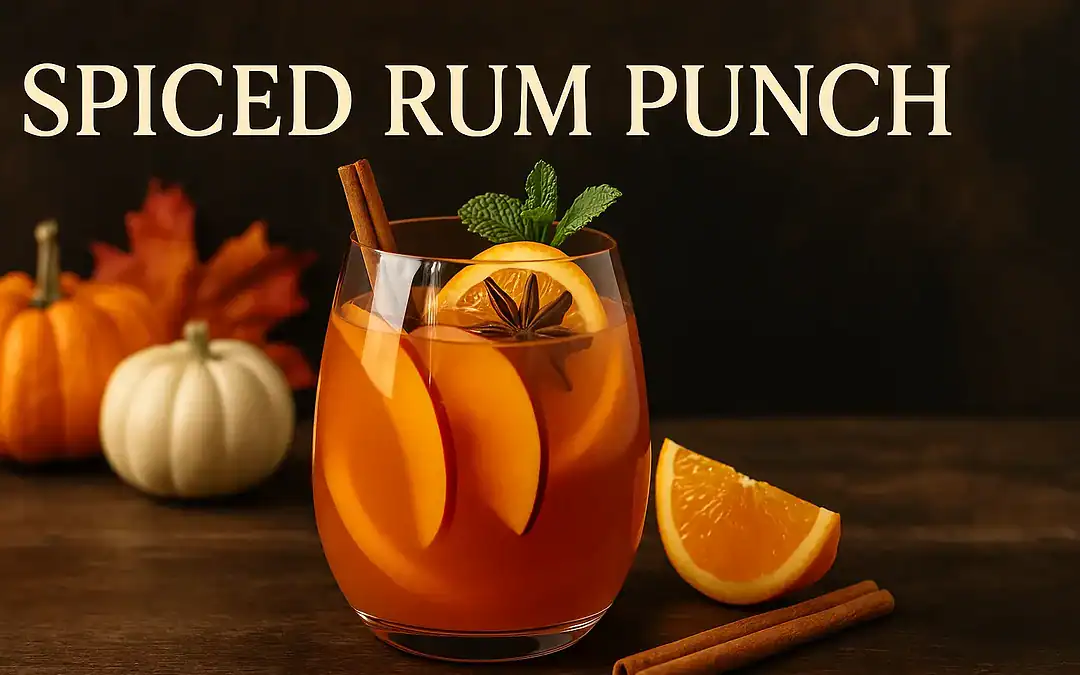
2. Spiced Rum Punch
Rum, pineapple, orange, lime and grenadine make a colorful party punch. Finish with a light grate of nutmeg, and use the apple variation below for more fall flavor.
| Ingredient | 8 servings | 20 servings | 50 servings |
|---|---|---|---|
| Spiced rum | 16 fl oz2 cups | 40 fl oz | 100 fl oz |
| Pineapple juice | 8 fl oz1 cup | 20 fl oz | 50 fl oz |
| Orange juice | 8 fl oz1 cup | 20 fl oz | 50 fl oz |
| Fresh lime juice | 4 fl oz½ cup | 10 fl oz | 25 fl oz |
| Grenadine | 4 fl oz½ cup | 10 fl oz | 25 fl oz |
| Chilled base total | 40 fl oz5 cups | 100 fl oz | 250 fl oz |
- Mix and chill the punch Mix the liquid ingredients and refrigerate in covered containers.
- Stir and pour over ice Stir the cold base before pouring, then measure 5 US fl oz into each ice-filled glass.
- Garnish and keep reserves cold Add a small grate of nutmeg and an orange slice. Keep reserve punch cold and refill the serving pitcher in stages.
For more apple flavor: Replace half the pineapple juice with an equal amount of apple cider. Substitute 4 fl oz for 8 servings, 10 fl oz for 20, or 25 fl oz for 50. The total batch volume stays the same. For 50 servings, the base is 250 fl oz, just under two gallons.
Choose your finish: A cold pour is the simplest party service. For the frothier texture of our single-drink recipe, shake each 5 fl oz portion with ice before straining over fresh ice. Taste your sample using the method you will actually serve.
3. Apple Cider Margarita
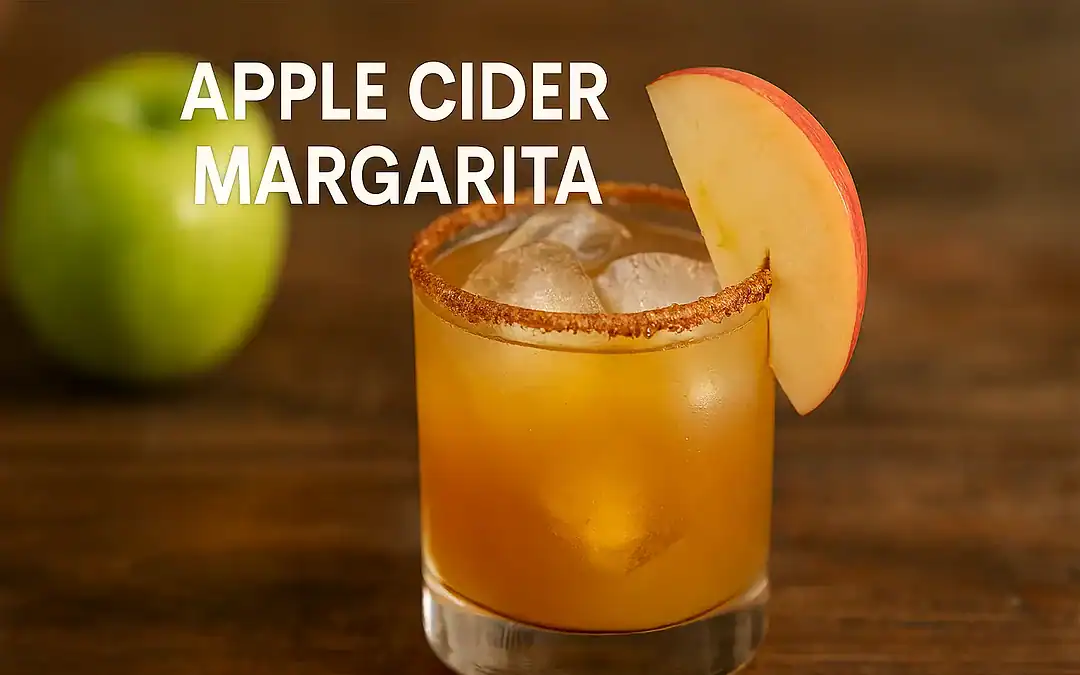
Build an apple cider margarita pitcher with tequila, cider, orange liqueur and fresh lime. The pitcher holds the measured base; shake each portion with ice for a cold, lively finish.
| Ingredient | 8 servings | 20 servings | 50 servings |
|---|---|---|---|
| Blanco tequila | 16 fl oz2 cups | 40 fl oz | 100 fl oz |
| Apple cider | 16 fl oz2 cups | 40 fl oz | 100 fl oz |
| Orange liqueur | 8 fl oz1 cup | 20 fl oz | 50 fl oz |
| Fresh lime juice | 6 fl oz¾ cup | 15 fl oz | 37.5 fl oz |
| Base before agave | 46 fl oz5¾ cups | 115 fl oz | 287.5 fl oz |
| Optional agaveTaste first | 0–4 fl oz0–½ cup | 0–10 fl oz | 0–25 fl oz |
- Mix the base and check sweetness Combine tequila, cider, orange liqueur and lime. Taste a finished sample before adding optional agave.
- Chill the base and prepare garnishes Refrigerate the sealed base. Prepare cinnamon-sugar and garnishes separately.
- Measure a portion for shaking Measure 5.75 US fl oz of base without agave into a shaker with ice. If the full optional agave amount is included, measure 6.25 US fl oz per serving. For any smaller adjustment, divide the total batch volume by the number of servings you prepared.
- Shake, strain and garnish Shake until cold and strain into a prepared rocks glass over fresh ice. Add an apple slice.
If you add agave to the batch: Increase the portion size by the amount added per serving. At the full ½ fl oz agave per drink, measure 6¼ fl oz of mixed base per serving. For any smaller adjustment, divide the total batch volume by the intended number of servings.
For 50 servings: The base is about 2¼ gallons before optional agave. Divide it among cold containers. Pair this cocktail with a fast pour if many guests will arrive together, and give the shaker, ice and rim station enough space.
4. Apple Cranberry Fizz
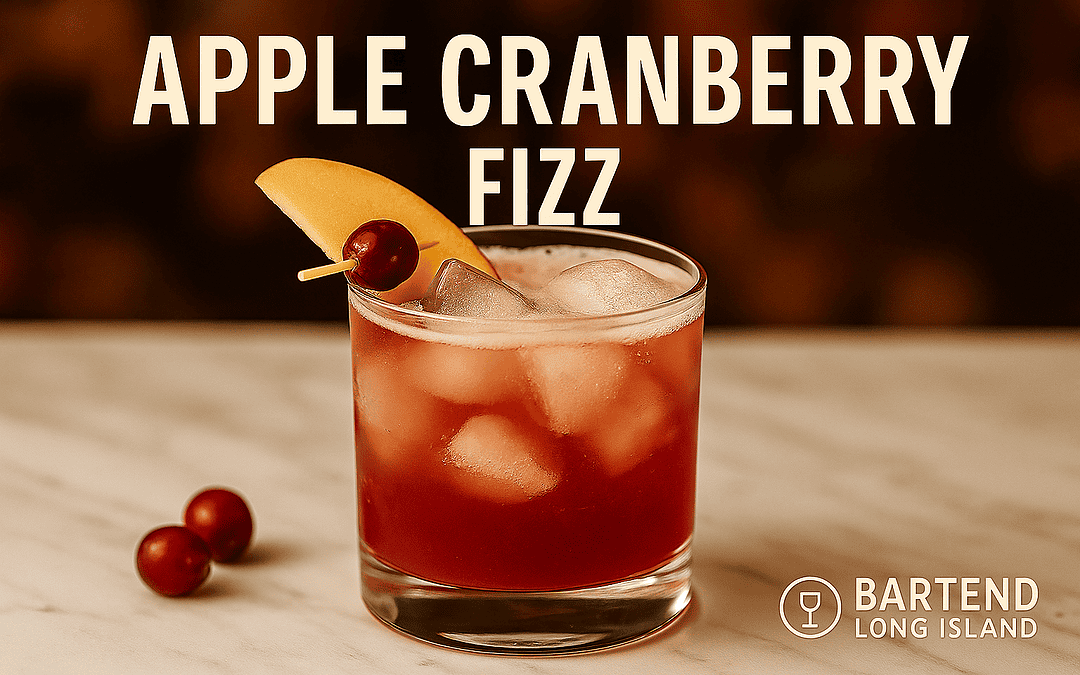
A tart, colorful fall mocktail with apple cider, cranberry, lemon and ginger ale. Give this batch its own clearly marked container and the same care with ice and garnish as the cocktails.
| Ingredient | 8 servings | 20 servings | 50 servings |
|---|---|---|---|
| Nonalcoholic cider | 24 fl oz3 cups | 60 fl oz | 150 fl oz |
| 100% cranberry juice | 16 fl oz2 cups | 40 fl oz | 100 fl oz |
| Fresh lemon juice | 4 fl oz½ cup | 10 fl oz | 25 fl oz |
| Chilled base total | 44 fl oz5½ cups | 110 fl oz | 275 fl oz |
| Ginger aleAdd to glasses | 24 fl oz3 cups | 60 fl oz | 150 fl oz |
- Mix, label and chill the base Combine cider, cranberry juice and lemon. Refrigerate in a sealed container labeled no alcohol.
- Pour and add ginger ale Pour 5.5 US fl oz of base into a tall glass with fresh ice. Top with 3 US fl oz of cold ginger ale and stir gently.
- Garnish and keep tools separate Garnish with an apple slice or cinnamon stick. Keep tools and the serving container separate from alcoholic batches.
Read the cranberry label: Pure, unsweetened cranberry juice is much tarter than cranberry juice cocktail or a sweet juice blend. Taste the finished drink before scaling. For a drier finish, replace some ginger ale with sparkling water. The 50-serving still base is 275 fl oz; keep the separate 150 fl oz of ginger ale cold until service.
Want a fall pitcher cocktail you can make the night before?
Fall sangria is a useful alternative when you want a chilled wine drink ready before guests arrive. Our published party batch makes approximately 12 to 14 pours.
For the 12-to-14-pour batch: Combine two 750 mL bottles of dry red wine, 4 cups apple cider, 1 cup brandy and ½ cup orange liqueur with 4 sliced apples, 2 sliced pears, 2 sliced oranges and 4 cinnamon sticks.
Cover and refrigerate at least four hours, preferably overnight. Serve over ice and add any club soda or ginger beer in individual glasses.
Double that recipe for roughly 24 to 28 pours, or quadruple it for roughly 48 to 56. Fruit, glass size and pouring style affect the yield, so treat these as ranges rather than exact serving counts. Planning a holiday menu? Our Thanksgiving cocktail guide has more seasonal options.
Start with pours, then plan the party
Batching reduces repeated measuring, but the final steps still need someone to handle them. For large batch fall cocktails, decide who will pour, add ice, top mixers and refill the serving containers before choosing the menu.
A 50-serving recipe makes 50 glasses of that drink. Your party may need more or fewer cocktails depending on the number of drinkers, service time, and whether you are also serving beer and wine.
Keep the menu focused. For one of our 12-guest private-party menus, we paired a Rosemary Gin Spritz with a Maple Old Fashioned. The two drinks offered distinct styles while keeping the ingredient list focused.
For a larger fall gathering, we would start with one fast pour, one signature cocktail and one alcohol-free option. Use our party drink planner to estimate overall quantities, then divide those pours across your menu.
Example menu split: If you decide you need 50 total pours, you could prepare 20 mules, 20 margaritas and 10 mocktails. For 10 mocktails, halve the 20-serving quantities in the Apple Cranberry Fizz table. This is a menu example, not an estimate for a whole 50-guest party.
How many bottles do you need?
Each alcoholic recipe here uses 2 fl oz of its main spirit per serving. For that one recipe, buy one 750 mL bottle for 8 servings, two for 20, or four for 50. Four bottles hold about 101.4 fl oz, so measure the required 100 fl oz rather than emptying every bottle. The margarita also needs orange liqueur: one 750 mL bottle covers 8 or 20 servings; two cover 50.
Check fridge space before mixing 50 servings. Three clean, food-safe one-gallon containers provide enough total capacity for any one of the 50-serving bases here, including the margarita with the full agave addition. Divide the base between them, label the contents and pour size, and refrigerate. Sparkling mixers are stored separately.
Your make-ahead plan, from fridge to first round
The day before
Choose the menu, buy ingredients and check cold-storage space. Chill unopened mixers. Prepare sangria if serving it, and set aside clean containers, measuring tools and labels.
The day of the party
Juice the citrus, mix the still bases and refrigerate. Taste one finished serving of each drink. Prepare rims and garnishes separately, and confirm the ice and glassware plan.
At service
Add fresh ice, then pour the measured base. Top fizzy drinks individually and shake margaritas in portions. Bring out smaller amounts at a time and refill from cold reserves.
Set up for the first round
Measure a complete drink into the glass you plan to use, including ice and any sparkling mixer. A mule contains 8 fl oz of liquid before the ice; the fizz contains 8½ fl oz. Both need a tall glass or mug with room above that volume. Check the finished margarita after shaking, because melted ice increases its volume.
At a party where everyone arrives together, put the ready-to-pour drink first and keep the shaken cocktail station clear. Set garnishes beside the glasses, use a measured pour, and replenish from a cold reserve instead of placing the whole batch on the bar.
Label the container with the finish, too. “Apple Cider Mule: 4½ oz base + 3½ oz ginger beer” is more useful during a busy round than a jug labeled only “mule.” Include the preparation date, ingredients and whether the batch contains alcohol.
Plan two jobs for ice. Ice for cocktails belongs in a clean service supply. Ice used to chill bottles and containers is a separate requirement. Keep backstock cold without relying on melting ice inside the entire batch.
Keep perishable cider and juice mixes at 40°F or below. Do not leave perishables unrefrigerated for more than two hours, or one hour when temperatures exceed 90°F. See the FDA’s safe food handling guidance.
Fall batch cocktail questions
How far ahead can you make batch cocktails?
Sangria benefits from several hours or an overnight rest in the refrigerator. For the citrus-based recipes here, we prefer to prepare the juice-containing base on the day of the party for the brightest flavor. You can measure spirits and chill unopened mixers earlier. Add sparkling ingredients and ice when serving.
How much water should you add to a batched cocktail?
It depends on the recipe and service method. These tables contain no added water: the mule and fizz get ice and a sparkling mixer, the punch is served over ice, and the margarita is shaken with ice. For a fully chilled, pour-ready version, test small measured additions of cold water in one serving until you like the balance over your serving ice. Multiply that water amount by the number of servings, then add it to both the total batch volume and the per-glass pour. For example, if your test calls for 1 fl oz water per drink, an eight-serving batch needs 8 fl oz extra water and each pour increases by 1 fl oz. That is a calculation example, not a fixed dilution recommendation. A poured drink will also have a different texture from a freshly shaken one.
Can you batch a shaken cocktail like a margarita?
Yes. Measure the liquid ingredients into a chilled base, then shake individual portions with ice when serving. This saves repeated measuring while keeping the texture and dilution of a shaken drink. Leave enough room in the shaker for ice and movement.
What are the easiest fall cocktails for a crowd?
A cold spiced rum punch or fall sangria needs the fewest finishing steps. A cider mule is quick when the base is chilled and someone can top each glass with ginger beer. For a larger menu, pair one of those with a shaken signature and a separate alcohol-free drink.
How many cocktails should you make for 50 guests?
Estimate drinkers, service hours and the share choosing cocktails instead of beer or wine. Then split the expected pours between your recipes. The 50-serving column makes 50 of one drink; it is not a full-party estimate. Our drink planner helps you start with your event details.
Can you put the whole batch in a drink dispenser?
A chilled, still punch can work if the dispenser can keep it cold. Check whether pulp or fruit could clog the tap. Keep bubbly mixers separate, place fruit garnishes beside the dispenser, and refill with cold reserve mix in stages. Margarita bases still need their finishing shake.
How long do batched cocktails last in the fridge?
There is no single shelf life for every batch. Fresh juice, cut fruit and other perishable ingredients set the limit, even when alcohol is present. Prepare these citrus mixes for the event day, keep them cold, and follow ingredient storage instructions. We plan sangria for an overnight infusion, not a long storage period.